





Does Civilization VII Accurately Teach History? A Deep Dive into Gaming and Education
February 09,2025
Civilization VII has sparked debate about its historical accuracy. While it immerses players in the rise and fall of global civilizations, the game simplifies complex events and timelines to prioritize gameplay. This leads to questions about its role in education—does it genuinely teach history or just entertain?
Does Civilization VII Really Teach History?
The highly anticipated Civilization VII is set to launch on Tuesday, 11th February, bringing another chapter to the legendary strategy game series. The game’s premise revolves around leading a civilization from ancient times to the modern era, making strategic decisions that shape history. While historians have contributed to its development, does Civilization VII truly serve as an educational tool, or is it just entertainment?
The Legacy of Civilization
Since its debut in 1991, the Civilization series has defined the 4X (eXplore, eXpand, eXploit, eXterminate) genre. Players control civilizations through different historical periods, engaging in diplomacy, warfare, technological advancement, and cultural expansion. The game has long been praised for its depth and complexity, but its educational value remains a topic of debate.
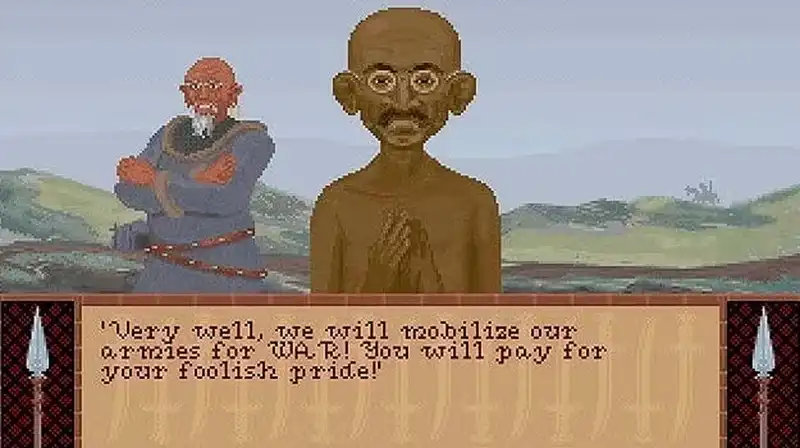
An image of Mohandas 'Nuclear' Gandhi, known online for his belligerent personality.
What’s New in Civilization VII?
Firaxis Games has introduced several changes in Civilization VII:
- Three distinct eras: Antiquity, Exploration, and Modern.
- Dynamic civilization evolution: Players can switch civilizations mid-game.
- Leader selection freedom: Any historical leader can govern any civilization.
- Simultaneous release on PC and consoles: A first for the series.
These new features allow players to manipulate history even further, raising questions about its accuracy.
The Role of Historians in Development
Dr Andrew Johnson, an associate professor at Stockholm University and a consultant for the game, believes that Civilization VII can ignite historical curiosity. He states, “The game can be a gateway drug! Someone playing as Machiavelli might become curious about who he was.” This suggests that while the game may not replace academic study, it can inspire further exploration.
Can Video Games Teach History?
Video games have long been a tool for engaging with history. Jean-Baptiste Rejalot, a history teacher, notes, “Our interest in the past often starts in childhood, through films, books, and games. In this sense, video games can indeed serve as an entry point.”
Many players have reported learning about historical figures and events through Civilization. A user on the Civilization VI subreddit shared how playing the game helped them win a quiz round by recalling Tenochtitlán as the capital of the Aztec Empire.
The Limitations of Learning Through Gaming
Despite these benefits, Dr Romain Vincent, a history teacher and researcher, cautions that no direct study proves a correlation between playing historical video games and learning history. He explains, “Students often learn more about how to play the game rather than gaining deep historical knowledge.”
He also points out that video games prioritise gameplay balance over historical accuracy. For example:
- Civilizations often exist alongside others they never encountered.
- Technologies progress in a simplified, linear fashion.
- Leaders rule for thousands of years, which is unrealistic.
Historical Accuracy vs. Game Mechanics
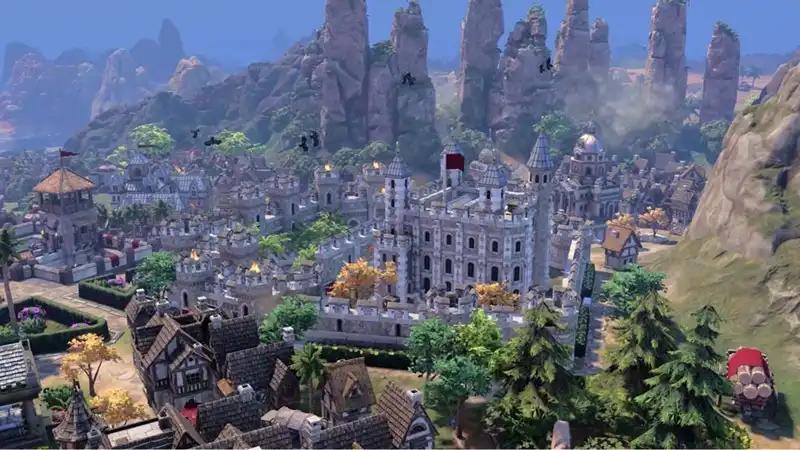
Civilization VII, like its predecessors, incorporates real historical events, figures, and wonders, but it does so with gameplay-first logic. The game aims for entertainment, sometimes sacrificing accuracy for balance and fun.
For example:
- Gandhi, historically a pacifist, is famously depicted as a nuclear aggressor due to a programming glitch in early games.
- The game presents a Great Man Theory of history, where influential figures change the world alone, rather than acknowledging broader societal factors.
- Wars are simplified, omitting key geopolitical complexities.
The Role of Critical Thinking in Historical Games
While Civilization VII may not teach history in a traditional sense, it does encourage critical thinking. Players must consider diplomacy, trade, cultural development, and the consequences of war. These mechanics mirror real-world challenges, helping players understand historical cause and effect.
Dr Rejalot notes, “Engaging in curiosity-driven research outside of the game—reading about figures, checking historical contexts—can be considered part of the historical method.”
Other Video Games That Explore History
Although Civilization is among the most famous historical games, other titles also incorporate history:
- Crusader Kings III: A medieval strategy game focusing on dynasties and political intrigue.
- Total War series: Blends real-time combat with turn-based empire management.
- Assassin’s Creed: Uses real-world settings and historical figures.
- Chants of Sennaar & The Return of the Obra Dinn: Puzzle-based games that require historical investigation.
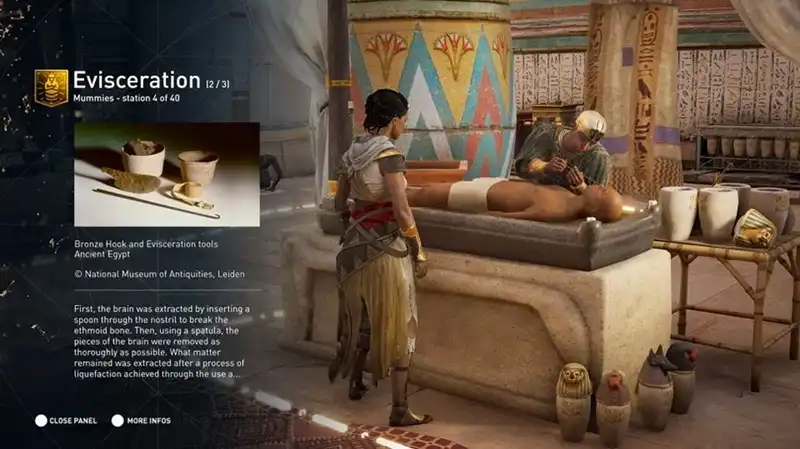
An image showcasing the Museum Mode in Assassin’s Creed Origins. ©Ubisoft.
These games often push players to question sources, analyse events, and think critically—key skills for understanding history.
Sid Meier’s Civilization VII - Gameplay Reveal Trailer
The Science Behind the Debate
Historians differentiate between general knowledge and historical methodology. While Civilization VII provides a broad understanding of history, it does not teach the historical process—the structured investigation of past events.
Dr Vincent explains, “History is not just about remembering facts. It’s about questioning sources, understanding biases, and reconstructing narratives. Games like Civilization give the illusion of academic rigour but should be viewed as a starting point, not a definitive source.”
The Educational Potential of Civilization VII
Despite its limitations, Civilization VII does offer educational benefits:
- Geography & Civilization Awareness: Players learn about historical empires and their locations.
- Strategic Thinking: Managing diplomacy, warfare, and economies provides insight into historical decision-making.
- Inspiration for Further Learning: Many players research historical events and figures outside of the game.
Conclusion
So, does Civilization VII truly teach history? The answer is yes and no. It introduces historical concepts, fosters curiosity, and encourages strategic thinking, but it does not replace academic study. The best way to use it as a learning tool is to combine gameplay with external research—reading books, exploring documentaries, and questioning historical narratives.
As Dr Vincent concludes, “If playing Civilization encourages someone to pick up a history book, then it has done its job.”
You may be also interested in them
Nintendo Switch 2 Game Key Cards Explained: How They Work, and What You Can Lend or Resell
Discover what Nintendo Switch 2 Game Key Cards are, how they work, and whether you can lend or resell them. A must-read for gamers buying physical gam...May 13,2025
Silent Hill f: Everything You Need to Know About the New Cult Horror Instalment
Silent Hill f returns, set in 1960s Japan. Follow Hinako Shimizu into fog-filled horror with rich Japanese folklore, puzzles, and returning composer A...March 21,2025
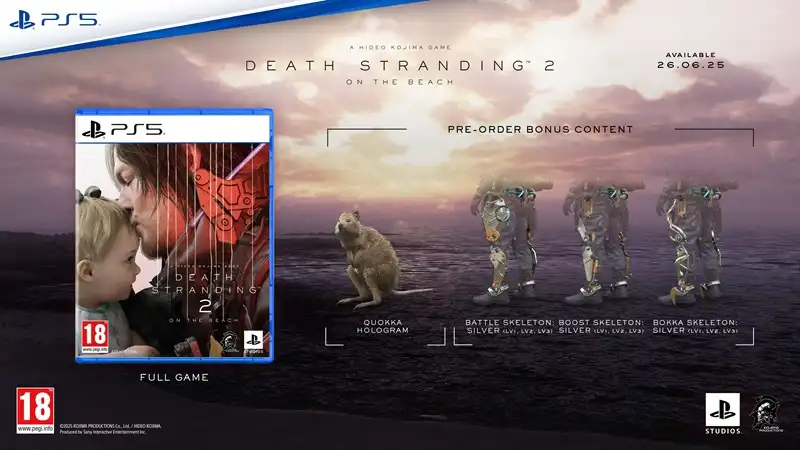
Death Stranding 2: On the Beach – All the Details on Hideo Kojima’s Sequel
Death Stranding 2: On the Beach is confirmed for release on PS5 on 26th June 2025. The sequel features returning cast members, new gameplay, and a sto...March 18,2025
Pokémon Legends: Z-A – Release Date, Trailer, Gameplay Details, and Everything We Know
Game Freak’s Pokémon Legends: Z-A launches in late 2025, set in Lumiose City with a possible Mega Evolution return. Explore new gameplay, Kalos lore,...March 04,2025

MindsEye: Release Date, Trailer, and Everything We Know So Far
MindsEye is a thrilling action-adventure game set in a futuristic world. Follow Jacob Diaz as he uncovers dark secrets behind his neural implant in th...February 25,2025
Like a Dragon: Pirate Yakuza in Hawaii – Release Date, Trailer, and Gameplay Details
Like a Dragon: Pirate Yakuza in Hawaii arrives on 21st February 2025 for PC, PlayStation, and Xbox. Step into Majima’s pirate adventure, fight enemies...February 11,2025
WWE 2K25: Release Date, Game Modes, and Key Features Revealed
WWE 2K25 launches on 14th March 2025, featuring 300+ superstars, The Island open-world mode, online MyGM, and The Bloodline Showcase. Enhanced gamepla...February 07,2025
Check Out These Products You May Be Interested In
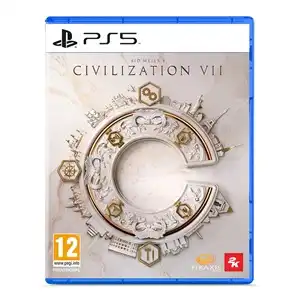
Sid Meier’s Civilization VII Standard Edition (PS5)
January 31,2025
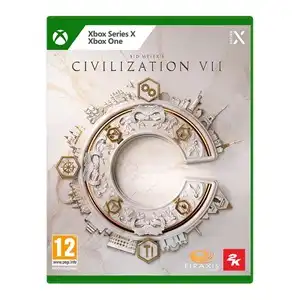
Sid Meier’s Civilization VII Standard Edition (Xbox Series X|One)
February 02,2025
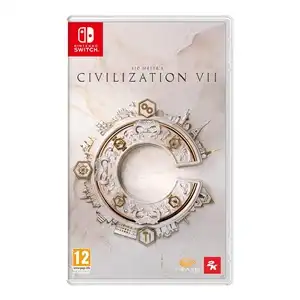
Sid Meier’s Civilization VII Standard Edition (Nintendo Switch)
February 02,2025
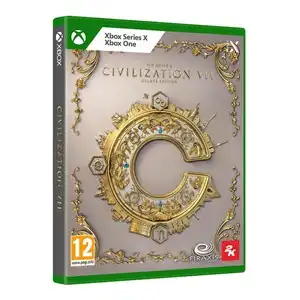
Sid Meier’s Civilization VII Deluxe Edition (Xbox Series X|One)
February 02,2025
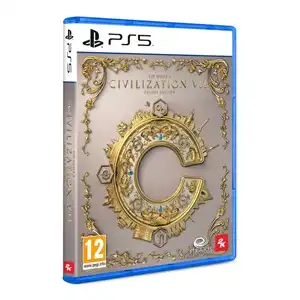
Sid Meier’s Civilization VII Deluxe Edition (PS5)
February 02,2025
Contact Info
- Address: UKSoftwaretech ltd, 6 Roffey Close, Purley. Surrey, CR8 4BH
- Phone: 08712887049 (Calls cost 13ppm plus your network access charge)
- Email: [email protected]